.jpg)
by Nick Zegarac
“True heroism is remarkably sober, very un-dramatic. It is not the urge to surpass all others at whatever cost, but the urge to serve others at whatever cost.” – Arthur Ashe
In producer Samuel Bronston we have an interesting dichotomy between the man who ‘would be king’ and a lonely Russian immigrant who desperately craved the autonomy of a legendary movie mogul. By the time his gargantuan and costly epic, The Fall of the Roman Empire (1964) debuted in theaters, Bronston’s best years as a film maker were arguably already behind him. Most certainly, his golden period in Spain had come to an abrupt and unfortunate end.
A scant three years earlier Bronston had been justly celebrated as the producer of El Cid (1961) – a lavish recanting of the iconic Spanish hero, Rodrigo Diaz de Vivar. Indeed, Broston’s flair was well suited for the 1960s, a decade in which virtually all the major studios indulged in ‘super productions’ – elephantine movies of immense scope and considerable length that sporadically did well at the box office.
.jpg) However, in Bronston’s case, the overwhelming success of El Cid proved a Maguffin as illusive, imaginary and fleeting as any mirage set upon the desert sands. Within a few short years of this critical and financial success, Bronston would find himself ousted from power, penniless and blacklisted. He would adopt the coloring of ‘box office poison’ and appear, at least on the surface, to be a broken man…or – perhaps not. This is his story.
However, in Bronston’s case, the overwhelming success of El Cid proved a Maguffin as illusive, imaginary and fleeting as any mirage set upon the desert sands. Within a few short years of this critical and financial success, Bronston would find himself ousted from power, penniless and blacklisted. He would adopt the coloring of ‘box office poison’ and appear, at least on the surface, to be a broken man…or – perhaps not. This is his story.THE ROUGH ROADS AHEAD
In the Spring of 1958, Samuel Bronston packed up his family and moved from Los Angeles to Madrid to produce American movies abroad. It was not a revolutionary concept. By the mid-1950s various film producers had done independent productions all over the world. Going even further back in history, since the mid-1930s, Metro-Goldwyn-Mayer had had permanent foreign production facilities in Britain. However, in Bronston’s case, he was venturing into decidedly uncharted territory as few of his contemporaries had done or would do for many years to come.
.jpg)
There was little about Samuel Bronston’s past that should have propelled his dreams forward. He was, by 1959, considered something of a has-been in Hollywood. To date, Bronston had produced two successful films; And Then There Were None (1945 – based on Agatha Christies’ Ten Little Indians) and the stirring war film, A Walk in the Sun (1945). However, each had gone so wildly over budget that Bronston was forced to sell off his shares in both projects. In the final tally, he managed to sell himself clear out of the business of making movies in America. It was an ominous prelude of things to come.
Yet, perhaps this financial turmoil that dogged him for most of his life had, in fact, been preordained. Bronston was born at the cusp of the revolution in Bessarabia, Russia (now the Republic of Moldova) on March 26, 1908. His cousin, Leon Davidovich Trotsky (below)was Vladimir Lenin’s right hand and a formidable force in the October revolt that toppled the Tsarist regime.
Young Bronston’s father had been a moderately successful businessman with cultural interests prior to this erupted chaos in his
.jpg) homeland. In fact, Bronston’s father despised the revolution and sought to rid his family of the stigma by association with Trotsky with a move to Paris in 1918. Unfortunately, with little money to travel on, the Bronston family (nine siblings) arrived in France dirt poor. For the next several years Sam and his brothers would have no real home. One story of this period in young Bronston’s life recollects that there was only one good pair of pants to the family name and those were reserved for the eldest boy to attend school. Another childhood story casts Bronston as an impoverished busker on the streets, begging for his supper by selling scraps and family heirlooms.
homeland. In fact, Bronston’s father despised the revolution and sought to rid his family of the stigma by association with Trotsky with a move to Paris in 1918. Unfortunately, with little money to travel on, the Bronston family (nine siblings) arrived in France dirt poor. For the next several years Sam and his brothers would have no real home. One story of this period in young Bronston’s life recollects that there was only one good pair of pants to the family name and those were reserved for the eldest boy to attend school. Another childhood story casts Bronston as an impoverished busker on the streets, begging for his supper by selling scraps and family heirlooms.What is for certain only now, years after his death, is that the early sketch of life that Bronston provided to the press in later years - that of a well educated and self-professed film savvy zeitgeist - seems to have been largely a fabrication derived from Bronston’s own fertile imagination and his sheer determination to succeed in a business he knew absolutely nothing about.
.BMP) To be certain, Bronston’s ability to cordially liaise with the highfaluting jet set made him the most appealing and elegant of social sponges – schmoozing wealthy friends as he lightened their pockets for dream projects that, as yet, he had neither the means nor the wherewithal to actually produce. Employed as a clock worker in Marseilles, Bronston finagled his way into United Artist’s French production unit by professing a deep understanding of making movies. It was a colossal lie, but it worked.
To be certain, Bronston’s ability to cordially liaise with the highfaluting jet set made him the most appealing and elegant of social sponges – schmoozing wealthy friends as he lightened their pockets for dream projects that, as yet, he had neither the means nor the wherewithal to actually produce. Employed as a clock worker in Marseilles, Bronston finagled his way into United Artist’s French production unit by professing a deep understanding of making movies. It was a colossal lie, but it worked..jpg) All appeared well on the surface for the Bronstons. However, in 1932 Sam was accused of writing bad checks. Following a brief incarceration, French authorities politely suggested that he ‘move on,’ and so Bronston migrated with his family to England the following year. There, he forged his first fortuitous alliance with the second wife and widow of famed author, Jack London – Charmian Kittredge (left). Bronston would produce his first independent project as an exaltation of the author, in part a thanks for Charmian’s faith in him; the rather turgid, though profitable The Story of Jack London (1943).
All appeared well on the surface for the Bronstons. However, in 1932 Sam was accused of writing bad checks. Following a brief incarceration, French authorities politely suggested that he ‘move on,’ and so Bronston migrated with his family to England the following year. There, he forged his first fortuitous alliance with the second wife and widow of famed author, Jack London – Charmian Kittredge (left). Bronston would produce his first independent project as an exaltation of the author, in part a thanks for Charmian’s faith in him; the rather turgid, though profitable The Story of Jack London (1943).In that same interim, Bronston moved his wife and his cousin, Leon Patlach to New York City, then Washington and finally Los Angeles. Of all the adult associations that Bronston would have throughout his life and career, perhaps none was as personally beneficial or rewarding as the one shared with Patlach – an utterly devoted, compassionate and intelligent man, who at least made valiant attempts to steer and manage Bronston’s professional life away from the pitfalls of total financial ruin.
.jpg)
MAN OF VISIONS
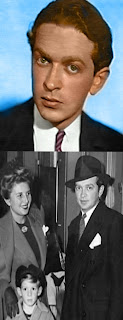.jpg) To suggest that Samuel Bronston was a visionary is perhaps a stretch. Though Bronston believed in the proliferation of film as art, there was nothing particularly cutting edge about his approach to film making. What set Bronston apart from most of his contemporaries was his inexhaustible optimism and his insatiable consistency in generating and regenerating ideas into feasible projects.
To suggest that Samuel Bronston was a visionary is perhaps a stretch. Though Bronston believed in the proliferation of film as art, there was nothing particularly cutting edge about his approach to film making. What set Bronston apart from most of his contemporaries was his inexhaustible optimism and his insatiable consistency in generating and regenerating ideas into feasible projects.
With $75,000 schmoozed from a Dutch expatriot, Bronston financed a comfortable home on Beverly Drive in Los Angeles where he sat idyll for the next two and a half years. An alliance with legendary producer, Budd Schulberg eventually led briefly to a career at Columbia Studios where Bronston produced The Adventures of Martin Eden (1942) and City Without Men (1943), the latter a B-movie starring then unknown Linda Darnell. It was during this tenure that Bronston quickly learned the film business from the ground up.
In retrospect, Bronston’s early days as a wily chameleon on the streets of Paris – cajoling, conning and conniving rich patrons - had provided him with the ideal training for this period in his life. Hence, when the Knights of Columbus planned an ambitious project to photograph the wonders of the Vatican, Bronston was there to take them up on their offer and commit to a thirty film series.
.jpg) To suggest that Samuel Bronston was a visionary is perhaps a stretch. Though Bronston believed in the proliferation of film as art, there was nothing particularly cutting edge about his approach to film making. What set Bronston apart from most of his contemporaries was his inexhaustible optimism and his insatiable consistency in generating and regenerating ideas into feasible projects.
To suggest that Samuel Bronston was a visionary is perhaps a stretch. Though Bronston believed in the proliferation of film as art, there was nothing particularly cutting edge about his approach to film making. What set Bronston apart from most of his contemporaries was his inexhaustible optimism and his insatiable consistency in generating and regenerating ideas into feasible projects.With $75,000 schmoozed from a Dutch expatriot, Bronston financed a comfortable home on Beverly Drive in Los Angeles where he sat idyll for the next two and a half years. An alliance with legendary producer, Budd Schulberg eventually led briefly to a career at Columbia Studios where Bronston produced The Adventures of Martin Eden (1942) and City Without Men (1943), the latter a B-movie starring then unknown Linda Darnell. It was during this tenure that Bronston quickly learned the film business from the ground up.
In retrospect, Bronston’s early days as a wily chameleon on the streets of Paris – cajoling, conning and conniving rich patrons - had provided him with the ideal training for this period in his life. Hence, when the Knights of Columbus planned an ambitious project to photograph the wonders of the Vatican, Bronston was there to take them up on their offer and commit to a thirty film series.
.jpg) Granted unprecedented access to the considerable archives of the Catholic diocese and numerous papal audiences, Bronston arrived at the Sistine Chapel with a veritable army of crew and photographic supplies. Unfortunately, the intense heat generated from the enormous lights caused a minor fire in the famed chapel and a major scandal that succinctly ended the project on a decidedly sour note. With one ill-timed event, Bronston had effectively managed to alienate the Catholic church and burn his bridges in Hollywood. He could have easily given up. Instead, Bronston turned to an unlikely country for the rebirth of his greatest ambitions – Spain.
Granted unprecedented access to the considerable archives of the Catholic diocese and numerous papal audiences, Bronston arrived at the Sistine Chapel with a veritable army of crew and photographic supplies. Unfortunately, the intense heat generated from the enormous lights caused a minor fire in the famed chapel and a major scandal that succinctly ended the project on a decidedly sour note. With one ill-timed event, Bronston had effectively managed to alienate the Catholic church and burn his bridges in Hollywood. He could have easily given up. Instead, Bronston turned to an unlikely country for the rebirth of his greatest ambitions – Spain.MOVIE MAKING ON A GRAND SCALE
.jpg)
In hindsight, Samuel Bronston and his adopted country – Spain – seems a perfect fit. Neither Bronston nor Spain had been particularly well received on the world stage. Both were in line for a major overhaul and both had their sights set on new horizons.
Under the totalitarian rule of General Francisco Paulino Hermenegildo Teodulo Franco y Bahamonde (Franco, for short), nationalist Spain had been perceived as something of a direct threat to the free democratic countries of the world. Indeed, Franco’s regime held close to the fascist trappings of Italian dictator, Benito Mussolini, with no international trade and an economically backward approach to foreign investment. (Americans could put money into the country. They just couldn’t take any money out!)
.jpg)
Even with this rigid structure in place, independent Hollywood film makers like Stanley Kramer and Robert Rossen had managed to shoot movies within the country’s borders with the films becoming an exportable commodity and generator of profits abroad rather than the initial investment in the project itself. The reason for these film makers shooting their large scale movies in Spain can be summed up in one word – frugality. Apart from the agreeably warm climate, Spain’s cost of labor and extras was dirt cheap.
Samuel Bronston, however, had a different slant. If, as Rossen and Kramer had proven, films could be made more grandly and cheaply in Spain, why leave the country after their shoot was over? Why not establish a permanent production facility right in the middle of Madrid? Into this brainstorm, Bronston reformulated ties he had already established in Washington with the Rockefellers and Pierponts; two of the most influential and wealthy families in the United States.
Bronston’s key investor in his newly amalgamated Spanish film making empire was Pierre du Pont III; a man of considerable clout and affluence as part of the Du Pont Corporation. Under du Pont’s personal assurances and guarantees with various banks across America, Samuel Bronston was afforded loans for his set up and production costs in Madrid.
.jpg)
Unfortunately for du Pont, the onus for repayment was not on Bronston’s success. Should Bronston fail to produce a hit film, the responsibility to pay back creditors would revert to du Pont. Evidently, Bronston’s checkered financial past and shaky personal credit were of little concern to du Pont. After all, his credit was exemplary. Indeed, the Du Pont family was wealthier than most of the financial institutions from which monies were being borrowed.
For outside investments, Bronston employed a savvy ‘pre-sell’ marketing philosophy that, while quite common today, was virtually unheard of during his time. In essence, Bronston would shoot some of his biggest and most impressive set pieces and sequences first, develop the footage, then use it to market an, as yet unfinished, film to potential distributors while procuring funds necessary to complete his movie.
.jpg) However, the slickest of all bait and switches was yet to come. A financial arrangement between Bronston and the Franco government involving the oil industry would cap off monies required to make Bronston’s movie dreams a reality. Franco licensed Bronston to act as an intermediary in the purchase and import of oil for Spain. Bronston purchased the crude at a fixed price on the open market, then turn around and sold the import to Spanish refineries for a considerably higher cost, skimming the differential off the top and funneling it back into his film productions.
However, the slickest of all bait and switches was yet to come. A financial arrangement between Bronston and the Franco government involving the oil industry would cap off monies required to make Bronston’s movie dreams a reality. Franco licensed Bronston to act as an intermediary in the purchase and import of oil for Spain. Bronston purchased the crude at a fixed price on the open market, then turn around and sold the import to Spanish refineries for a considerably higher cost, skimming the differential off the top and funneling it back into his film productions.For du Pont, the Bronston oil deal was just as lucrative, though on different terms: legal money laundering. Since no investment in the Spanish economy could be refurbished in anything other than Pesetas – the national currency – and since du Pont would only accept his remuneration in American dollars - du Pont’s sale of oil to Bronston was repaid by the international monies garnered from Bronston’s completed movies after they had began to turn a profit on the world market.
For their efforts, the Franco government was well repaid in the court of popular public opinion. Once viewed as a pariah state, Spain was now being officially recognized as a tourist Mecca with an endless stream of dignitaries and stars parading through the gates of Bronston’s studios in Madrid.
QUICKENING RISE/METEORIC FALL
.BMP)
Very early in the planning stages, Bronston realized that what he required to make his empire fly was a ‘heavy’ in his front office – someone with a slick and dedicated business acumen who could organize his dream into a stable reality. That man was Philip Yorden (right), an attorney whose own deal with Bronston created quite a stir. For his services as writer/script doctor, Bronston agreed to pay Yorden a then unheard of $400,000.00 per project. In turn, Yorden, who actually knew very little about screenplay writing, tapped blacklisted writers in Hollywood.
A deal was reached with writers Ben Barsman and Bernie Gordon whereby the two would write scripts for a modest fee and Yorden would receive sole screen credit. Barsman and Gordon’s first project was a turgid retelling of the life and times of American patriot John Paul Jones. Their second collaboration would yield one of the best epics yet produced.
.BMP)
El Cid (1961) is usually accredited as being Bronston’s first epic, but actually King of Kings (1959) deserves that honor. Released under the MGM banner, the film starred Jeffrey Hunter as Christ and became the brunt of unceremoniously bad and scathing reviews. In a snap assessment that was picked up by others, the New York Times dubbed the film ‘I Was A Teenage Jesus.’
Nevertheless, Bronston’s move to Spain, coupled with a then staggering $6,000,000.00 investment on El Cid quickly remedied this setback and resurrected Bronston’s reputation within the industry. El Cid took in a staggering $26,000,000.00 in the United States alone and at least that much worldwide, making it one of the most successful movies of its generation. It was the beginning of a very brief, but meteoric golden age for Samuel Bronston.
.jpg) Immediately following this initial flush of success, Bronston attempted to secure actor Charlton Heston’s services for a follow-up project; The Fall of the Roman Empire (1964). It was perceived that the success of El Cid had largely been due to Heston’s star power on theater marquees – something King of Kings had lacked with the casting of forgotten matinee idol Jeffrey Hunter. Heston, however, was disinterested in the product, judging it too close a cousin to Ben-Hur (1959); the film that had won him his Best Actor Oscar.
Immediately following this initial flush of success, Bronston attempted to secure actor Charlton Heston’s services for a follow-up project; The Fall of the Roman Empire (1964). It was perceived that the success of El Cid had largely been due to Heston’s star power on theater marquees – something King of Kings had lacked with the casting of forgotten matinee idol Jeffrey Hunter. Heston, however, was disinterested in the product, judging it too close a cousin to Ben-Hur (1959); the film that had won him his Best Actor Oscar.As was usually the case with Bronston, he had more than one project on the go simultaneously. Even though he had already begun construction on the sets for The Fall of the Roman Empire, the producer came back to Heston almost immediately with another script for 55 Days at Peking (1963). Heston agreed and Bronston tore down the sets being built for ‘Fall’ to accommodate construction on the Forbidden City for ‘Peking.’ At the
.jpg) time, the Forbidden City set was the largest ever constructed for a motion picture – a record Bronston would break one year later when he ordered the construction of an almost exact replica of the Roman forum for The Fall of the Roman Empire.
time, the Forbidden City set was the largest ever constructed for a motion picture – a record Bronston would break one year later when he ordered the construction of an almost exact replica of the Roman forum for The Fall of the Roman Empire.To suggest that Bronston’s approach to film budgeting was liberal is to understate the immense costs he frequently incurred in his obsessive quest for historical authenticity. Indeed, both the Forbidden City and Roman Forum sets designed by production manager C.O. ‘Doc’ Erikson were not only built full scale, but also three dimensionally so that regardless of the camera angle chosen they could be photographed on all sides as an actual city rather than facades with mere cardboard backing.
Ironically, given the lavishness and attention to detail, the cameramen working on these movies chose to utilize very little of either set in the finished films. But this did not concern Bronston, who derived a certain amount of sublime pleasure when local and world historians arrived to witness the film shoot, only to be met with jaw-dropping historical accuracy that dwarfed their imaginations as it boggled their minds.
So long as Bronston could be reassured that he would be able to roll the profits from one ‘super production’ into the next, this precarious cycle of financial turnover in his film empire remained renewable. Unfortunately for Bronston, 55 Days at Peking did not perform as well at the box office as El Cid, placing a strain on the studio’s next project; The Fall of the Roman Empire.
.jpg) When Production Manger ‘Doc’ Erikson approached Bronston with a $9,000,000.00 budget for this latter project – of which Bronston had only secured seven and a half million at his immediate disposal – the producer fastidiously went to work on procuring more outsider investment to make up the difference rather than cut his costs down to suit his bottom line.
When Production Manger ‘Doc’ Erikson approached Bronston with a $9,000,000.00 budget for this latter project – of which Bronston had only secured seven and a half million at his immediate disposal – the producer fastidiously went to work on procuring more outsider investment to make up the difference rather than cut his costs down to suit his bottom line..jpg)
.jpg) ALL ROADS LEAD TO RUIN
ALL ROADS LEAD TO RUINIn retrospect, it appears as though Samuel Bronston’s motives for investing heavily in movies that, comparatively speaking, returned very little to his coffers, was a pursuit founded and grounded purely in artistic reverence rather than crass commercial greed. As example; when, in 1963 studio manager Paul Lazarus had suggested that the company make B-exploitation films (cheap, quick and dirty) to procure monies for the more lofty epics, the request was flatly rejected by Bronston with the assurance that he would never be willing to compromise anything in quality for the sake of a quick profit.
As a result, Samuel Bronston - described as “a battleship with a fixed rudder” by his own son – never acquired the prowess of a forward planner per say beyond the scope of his next big movie. That he entrusted the daily operation of his studio to colleagues who chose to mismanage monies elsewhere, and, eventually took advantage of Bronston’s hospitality to the point of no return where it bankrupted his Spanish adventure, remains a debatable travesty with social implications.
For Pierre du Pont, the fallout was more immediate and decidedly more embarrassing. When several defaulted loans made to the Bronston organization found their way to du Pont’s desk following the disastrous release of The Fall of the Roman Empire, du Pont was forced to pay in excess of several million dollars to resolve the fiasco – ruining his impeccable credit, ousting him from his inherited family business and publicly humiliating him within his immediate circle of close friends.
.jpg)
Thereafter, du Pont made it his life-long purpose to destroy Samuel Bronston and put an end to his film making endeavors forever. The release of Circus World (1964) not withstanding, Samuel Bronston’s next project; Paris 1900 never went beyond the planning stage.
It is perhaps too easy to simply blame Samuel Bronston outright for his inability to harness all the financial and political energies he had accrued up until this point. Bronston’s finesse for business matters had always been unrefined and clumsy. Despite a federal investigation into ‘secret’ bank accounts in Switzerland (that earned two indictments against Bronston before being overturned by the Supreme Court), the unvarnished truth surrounding Samuel Bronston’s personal finances was that he lived the remainder of his years on a meager social security check of $367.00 a month with his children supporting him for the rest of his life.
In the last twelve years of that life, Bronston never stopped planning his big comeback, though the onset of Alzheimer’s disease did much to slow down and eventually end his ability to conduct business that might have procured one last return to greatness. He died of pneumonia on January 12, 1994 in Sacramento California and, as per his request, was buried in Madrid.
.BMP) PAVED WITH GOOD INTENSIONS
PAVED WITH GOOD INTENSIONS
.jpg) In the years since his passing, the importance and stature of Samuel Bronston’s filmic legacy has only grown and this is as it should be. Few of his movies were embraced by critics during their original theatrical run: regrettable, though not surprising. Jealousy is often accompanied by a wicked tongue. And there is much to be envious in Samuel Bronston’s personal mantra; a man whose epic idealism was bonded to a decisive need to do things his own way, in his own manner and without any thought or concern for the interpretation or misperception of his artistry visible only in its final cut.
In the years since his passing, the importance and stature of Samuel Bronston’s filmic legacy has only grown and this is as it should be. Few of his movies were embraced by critics during their original theatrical run: regrettable, though not surprising. Jealousy is often accompanied by a wicked tongue. And there is much to be envious in Samuel Bronston’s personal mantra; a man whose epic idealism was bonded to a decisive need to do things his own way, in his own manner and without any thought or concern for the interpretation or misperception of his artistry visible only in its final cut.
Was Samuel Bronston a failure? The question invariably arises. Financially, there seems to be little debate. Yet, is the measure of a man only to be found in his wallet or also in his whimsy? Bronston’s great gift to the world will always be the four epics he left behind: El Cid, 55 Days at Peking, The Fall of the Roman Empire and Circus World. The films are not just grand in size, scope and style. They speak to Bronston’s daydream-like ability to will past civilizations to life; to his sense of history, his passion for living and his commitment to quality. These are not failed pursuits but rather dreams concretely realized..jpg)
Was Samuel Bronston an egotist? Perhaps – but since when is personal pride an imperishable evil, especially when it is coupled to such incredible genius that gave and gave freely of both himself and his movies?
Was Samuel Bronston a con artist? Perhaps…but one who truly believed in the sincerity of his abilities to ‘sell’ practically anyone on any venture during his lifetime. That Bronston was preyed upon by those closest to him during his brief golden period in Spain speaks more to a sacrificial lamb quality rather than base personal greed.
So, is Samuel Bronston a tragic figure? Hardly - for there is little of the man, either in his prime or even during his final years, that would have accepted his best work was behind him. In Bronston’s heart and mind he was always one step away from his next big filmic adventure. He never stopped planning. He never stopped dreaming. Hence, the dream endures even as the dreamer is no more.
The world of entertainment today has not produced another Bronston since. It is fairly unlikely that tomorrow’s generation of film makers will either. For, when all is said and done and written, after the critics and the vultures have lost interest and decamped the bones of success that have been picked clean, the inevitable measure of Bronston’s own ‘success’ is perhaps best distilled into these simple few words from Benjamin Disraeli: “The legacy of heroes is the memory of a great name and the inheritance of a great example.”
PAVED WITH GOOD INTENSIONS.jpg) In the years since his passing, the importance and stature of Samuel Bronston’s filmic legacy has only grown and this is as it should be. Few of his movies were embraced by critics during their original theatrical run: regrettable, though not surprising. Jealousy is often accompanied by a wicked tongue. And there is much to be envious in Samuel Bronston’s personal mantra; a man whose epic idealism was bonded to a decisive need to do things his own way, in his own manner and without any thought or concern for the interpretation or misperception of his artistry visible only in its final cut.
In the years since his passing, the importance and stature of Samuel Bronston’s filmic legacy has only grown and this is as it should be. Few of his movies were embraced by critics during their original theatrical run: regrettable, though not surprising. Jealousy is often accompanied by a wicked tongue. And there is much to be envious in Samuel Bronston’s personal mantra; a man whose epic idealism was bonded to a decisive need to do things his own way, in his own manner and without any thought or concern for the interpretation or misperception of his artistry visible only in its final cut.Was Samuel Bronston a failure? The question invariably arises. Financially, there seems to be little debate. Yet, is the measure of a man only to be found in his wallet or also in his whimsy? Bronston’s great gift to the world will always be the four epics he left behind: El Cid, 55 Days at Peking, The Fall of the Roman Empire and Circus World. The films are not just grand in size, scope and style. They speak to Bronston’s daydream-like ability to will past civilizations to life; to his sense of history, his passion for living and his commitment to quality. These are not failed pursuits but rather dreams concretely realized.
.jpg)
Was Samuel Bronston an egotist? Perhaps – but since when is personal pride an imperishable evil, especially when it is coupled to such incredible genius that gave and gave freely of both himself and his movies?
Was Samuel Bronston a con artist? Perhaps…but one who truly believed in the sincerity of his abilities to ‘sell’ practically anyone on any venture during his lifetime. That Bronston was preyed upon by those closest to him during his brief golden period in Spain speaks more to a sacrificial lamb quality rather than base personal greed.
So, is Samuel Bronston a tragic figure? Hardly - for there is little of the man, either in his prime or even during his final years, that would have accepted his best work was behind him. In Bronston’s heart and mind he was always one step away from his next big filmic adventure. He never stopped planning. He never stopped dreaming. Hence, the dream endures even as the dreamer is no more.
The world of entertainment today has not produced another Bronston since. It is fairly unlikely that tomorrow’s generation of film makers will either. For, when all is said and done and written, after the critics and the vultures have lost interest and decamped the bones of success that have been picked clean, the inevitable measure of Bronston’s own ‘success’ is perhaps best distilled into these simple few words from Benjamin Disraeli: “The legacy of heroes is the memory of a great name and the inheritance of a great example.”
In such context, Samuel Bronston was one of the best..jpg) @Nick Zegarac 2008 (all rights reserved).
@Nick Zegarac 2008 (all rights reserved).
@Nick Zegarac 2008 (all rights reserved).


